article-journal

Phylogeny and biogeography of Caribbean mammals
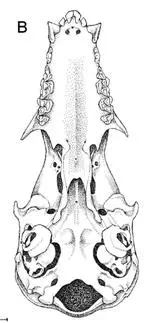
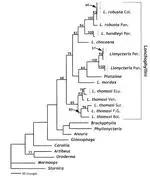
Vicariance and dispersal hypotheses have been proposed over the last two hundred years to explain the distribution, diversity, and faunal composition of the Caribbean biota. Despite great advances in understanding the geological history of the region, recent biogeographical reviews have not used historical biogeographical methods. In this paper I review the taxonomy, distribution and phylogeny of all Cenozoic Caribbean non-volant mammals and four bat lineages, and present reconciled trees for available phylogenies. Dates available from the fossil record and hypotheses of divergence based on molecular phylogenetic studies are also included in general assessments of fit between proposed geological models and Caribbean mammal diversification. The evidence posited in mammalian phylogenies does not add to the argument of dispersal vs. vicariance. One previously unidentified temporal pattern, the colonization of the Caribbean by South American mammals between the Palaeocene and the Middle Miocene, accounts for the distribution and phylogeny of the majority of lineages studied. Choloepodine and megalocnine sloths, hystricognath rodents, and primates all arrived during this window of colonization. Of these, megalocnine sloths, hystricognath rodents, Brachyphylla and allied bats, Stenodermatina bats, and primates fit the pattern of divergence from the mainland implied by the Gaarlandia hypothesis. Sloths, rodents and primates also roughly fit the timing of arrival to the Caribbean implied by Gaarlandia. The remaining taxa show contradictory dates of divergence according to molecular clock estimates, and no taxa fit the predicted timing and pattern of divergence among Antillean landmasses under the Gaarlandia model. Choloepodine sloths, murid rodents, insectivorans, mormoopids, and natalids show patterns of divergence from the mainland that are inconsistent with the Gaarlandia hypothesis and seem to require taxon-specific biogeographical explanations.
Regulating access to genetic resources under the Convention on Biological Diversity: an analysis of selected case studies
In 1992 parties to the Convention on Biological Diversity (CBD) agreed to develop and implement policies to regulate and facilitate access to genetic resources (AGR). We examine regulations and agreements in Brazil, Colombia, and the Philippines in detail and discuss how these countries are implementing the AGR mandate. In particular, we evaluate progress toward achieving the CBD objectives of conserving biological diversity, using its components in a sustainable manner, and equitably sharing the benefits arising from the use of genetic resources. We highlight the difficulties in developing and implementing these policies, arising from the conflicting goals of regulating and facilitating AGR, as well as the special character of genetic resources, existing ex situ collections, issues of ownership and tenure, and the dearth of legal, institutional, and scientific capacity in many countries. We recommend (1) independent, multidisciplinary evaluation of the success of the access policy in achieving CBD objectives, (2) resolution of the conflict between traditional land tenure and legal property rights of genetic resources so as to match conservation obligations with benefit-sharing rights, (3) recognition that benefits obtained from AGR may be entirely non-monetary, and (4) that countries provide a ’two-track’ AGR application process separately for commercial and non-commercial users.
Illicit Crops and Bird Conservation Priorities in Colombia
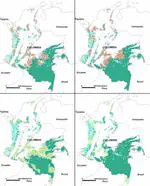
Over the last 5 years the amount of land in Colombia planted in illicit crops, such as coca and poppy, has grown an average of 21% per year and may account for half the total area deforested in 1998. I conducted a geographic analysis of the distribution of illicit crops relative to standing forests and areas of conservation priority for birds. Municipalities where illicit crops have been detected were overlaid on a forest‐cover map of Colombia and two types of conservation priorities for birds were plotted: distributions of threatened species and minimum‐area sets for conservation of all species. The sites of the highest conservation priority affected by illicit crops were in the southern Andes, the northern West Andes and adjacent Darién lowlands, the Sierra Nevada de Santa Marta, Serranía del Perijá, and the Serranía de San Lucas. The largest forested areas threatened by illicit crops were in Amazonia and the Amazonian foothills of the East Andes, sites of low conservation priority. Given current trends in the expansion of illicit crops and the narrow endemicity of some bird species, the conversion of forests for illicit‐crop cultivation may result in the extirpation of several bird species from affected regions. To impede this, those involved in illicit‐crop eradication and alternative development should give high priority to the protection of existing forest reserves and parks from the planting of illicit crops. Such efforts should also extend to areas proposed for conservation based on the diversity of threatened and endemic birds that are currently unprotected. The conservation of threatened and endemic birds in Colombian forests may hinge on successfully curbing incentives for deforestation, including the international trade in illicit drugs.