article-journal

Exploring population genetic structure in three species of Lesser Antillean bats
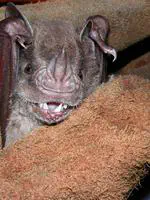
We explore population genetic structure in phyllostomid bats (Ardops nichollsi, Brachyphylla cavernarum and Artibeus jamaicensis) from the northern Lesser Antilles by investigating the degree to which island populations are genetically differentiated. Our hypothesis, that the island populations are genetically distinct because of a combination of founding events, limited migration and genetic drift exacerbated by catastrophe‐induced fluctuations in population size, is derived from a priori hypotheses erected in the literature. The first prediction of this hypothesis, that within each species island populations are monophyletic, was tested using a parametric bootstrap approach. Island monophyly could not be rejected in Ardops nichollsi (P = 0.718), but could be rejected in B. cavernarum (P < 0.001) and Artibeus jamaicensis (P < 0.001). A second prediction, that molecular variance is partitioned among islands, was tested using an amova and was rejected in each species [Ardops nichollsi (P = 0.697); B. cavernarum (P = 0.598); Artibeus jamaicensis (P = 0.763)]. In B. cavernarum and Artibeus jamaicensis, the admixture in mitochondrial haplotypes from islands separated by > 100 km of ocean can be explained either by interisland migration or by incomplete lineage sorting of ancestral polymorphism in the source population. As an a posteriori test of lineage sorting, we used simulations of gene trees within a population tree to suggest that lineage sorting is an unlikely explanation for the observed pattern of nonmonophyly in Artibeus jamaicensis (PW < 0.01; PSE = 0.04), but cannot be rejected in B. cavernarum (PW = 0.81; PSE = 0.79). A conservative interpretation of the molecular data is that island populations of Artibeus jamaicensis, although isolated geographically, are not isolated genetically.
Phylogeny of the Lonchophyllini (Chiroptera: Phyllostomidae)
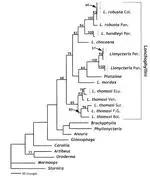
A combination of 1,140 base pairs of the mitochondrial cytochrome b gene of Platalina, Lionycteris, and several species of Lonchophylla (Chiroptera: Phyllostomidae) with 150 morphological, sex chromosome, and restriction site characters were used in an attempt to resolve relationships among the lonchophylline taxa. In addition, the monophyly of Lonchophylla was tested, particularly with respect to Platalina. The most parsimonious hypothesis of relationships using all available characters was (L. mordax ((L. chocoana (L. robusta, L. handleyi))(L. thomasi (Lionycteris, Platalina)))). Lonchophylla appears to be paraphyletic, but this arrangement is not well supported. Our analyses suggest that Platalina is not simply a large Lonchophylla, as had been suggested by previous morphological analyses. The low support values for basal relationships found in this study are probably caused by saturation in cytochrome b 3rd positions. Additionally, 2 alternative explanations are viable (if improbable): unsampled lonchophyllines are necessary to confidently resolve relationships at the base of the group, or the lack of resolution at the base of the lonchophylline phylogeny might be explained by rapid speciation following the separation from other glossophagines. Future work examining the phylogenetic relationships of lonchophylline bats should focus on describing new taxa, obtaining tissue samples from unsequenced representatives, and adding nuclear loci to this mitochondrial DNA data set.
Phylogeny and biogeography of Caribbean mammals
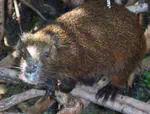
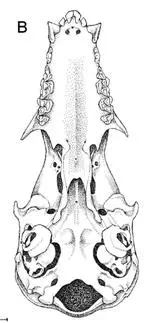
Vicariance and dispersal hypotheses have been proposed over the last two hundred years to explain the distribution, diversity, and faunal composition of the Caribbean biota. Despite great advances in understanding the geological history of the region, recent biogeographical reviews have not used historical biogeographical methods. In this paper I review the taxonomy, distribution and phylogeny of all Cenozoic Caribbean non-volant mammals and four bat lineages, and present reconciled trees for available phylogenies. Dates available from the fossil record and hypotheses of divergence based on molecular phylogenetic studies are also included in general assessments of fit between proposed geological models and Caribbean mammal diversification. The evidence posited in mammalian phylogenies does not add to the argument of dispersal vs. vicariance. One previously unidentified temporal pattern, the colonization of the Caribbean by South American mammals between the Palaeocene and the Middle Miocene, accounts for the distribution and phylogeny of the majority of lineages studied. Choloepodine and megalocnine sloths, hystricognath rodents, and primates all arrived during this window of colonization. Of these, megalocnine sloths, hystricognath rodents, Brachyphylla and allied bats, Stenodermatina bats, and primates fit the pattern of divergence from the mainland implied by the Gaarlandia hypothesis. Sloths, rodents and primates also roughly fit the timing of arrival to the Caribbean implied by Gaarlandia. The remaining taxa show contradictory dates of divergence according to molecular clock estimates, and no taxa fit the predicted timing and pattern of divergence among Antillean landmasses under the Gaarlandia model. Choloepodine sloths, murid rodents, insectivorans, mormoopids, and natalids show patterns of divergence from the mainland that are inconsistent with the Gaarlandia hypothesis and seem to require taxon-specific biogeographical explanations.
Regulating access to genetic resources under the Convention on Biological Diversity: an analysis of selected case studies
In 1992 parties to the Convention on Biological Diversity (CBD) agreed to develop and implement policies to regulate and facilitate access to genetic resources (AGR). We examine regulations and agreements in Brazil, Colombia, and the Philippines in detail and discuss how these countries are implementing the AGR mandate. In particular, we evaluate progress toward achieving the CBD objectives of conserving biological diversity, using its components in a sustainable manner, and equitably sharing the benefits arising from the use of genetic resources. We highlight the difficulties in developing and implementing these policies, arising from the conflicting goals of regulating and facilitating AGR, as well as the special character of genetic resources, existing ex situ collections, issues of ownership and tenure, and the dearth of legal, institutional, and scientific capacity in many countries. We recommend (1) independent, multidisciplinary evaluation of the success of the access policy in achieving CBD objectives, (2) resolution of the conflict between traditional land tenure and legal property rights of genetic resources so as to match conservation obligations with benefit-sharing rights, (3) recognition that benefits obtained from AGR may be entirely non-monetary, and (4) that countries provide a ’two-track’ AGR application process separately for commercial and non-commercial users.