article-journal

Disentangling mechanical and sensory modules in the radiation of Noctilionoid bats
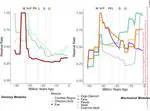
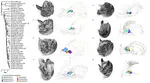
With diverse mechanical and sensory functions, the vertebrate cranium is a complex anatomical structure whose shifts between modularity and integration, especially in mechanical function, have been implicated in adaptive diversification. Yet, how mechanical and sensory systems and their functions coevolve, and how their interrelationship contributes to phenotypic disparity remain largely unexplored. To examine the modularity, integration, and evolutionary rates of sensory and mechanical structures within the head, we analyzed hard and soft tissue scans from ecologically diverse bats in the superfamily Noctilionoidea, a clade that ranges from insectivores and carnivores to frugivores and nectarivores. We identified eight regions that evolved in a coordinated fashion, thus recognizable as evolutionary modules: five associated with bite force, and three linked to olfactory, visual, and auditory systems. Interrelationships among these modules differ between Neotropical leaf-nosed bats (Family Phyllostomidae) and other noctilionoids. Consistent with the hypothesis that dietary transitions begin with changes in the capacity to detect novel food items followed by adaptations to process them, peak rates of sensory module evolution predate those of some mechanical modules. We propose the coevolution of structures influencing bite force, olfaction, vision, and hearing constituted a structural opportunity that allowed the phyllostomid ancestor to take advantage of existing ecological opportunities and contributed to the clade’s remarkable radiation.
Ecological constraints on highly evolvable olfactory receptor genes and morphology in neotropical bats
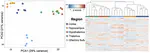
While evolvability of genes and traits may promote specialization during species diversification, how ecology subsequently restricts such variation remains unclear. Chemosensation requires animals to decipher a complex chemical background to locate fitness-related resources, and thus the underlying genomic architecture and morphology must cope with constant exposure to a changing odorant landscape; detecting adaptation amidst extensive chemosensory diversity is an open challenge. In phyllostomid bats, an ecologically diverse clade that evolved plant-visiting from an insectivorous ancestor, the evolution of novel food detection mechanisms is suggested to be a key innovation, as plant-visiting species rely strongly on olfaction, supplementarily using echolocation. If this is true, exceptional variation in underlying olfactory genes and phenotypes may have preceded dietary diversification. We compared olfactory receptor (OR) genes sequenced from olfactory epithelium transcriptomes and olfactory epithelium surface area of bats with differing diets. Surprisingly, although OR evolution rates were quite variable and generally high, they are largely independent of diet. Olfactory epithelial surface area, however, is relatively larger in plant-visiting bats and there is an inverse relationship between OR evolution rates and surface area. Relatively larger surface areas suggest greater reliance on olfactory detection and stronger constraint on maintaining an already diverse OR repertoire. Instead of the typical case in which specialization and elaboration are coupled with rapid diversification of associated genes, here the relevant genes are already evolving so quickly that increased reliance on smell has led to stabilizing selection, presumably to maintain the ability to consistently discriminate among specific odorants — a potential ecological constraint on sensory evolution.