article-journal

Weather disasters and their underreported transboundary impacts on Amazonian communities
In the Amazon, climate and land use change are expected to intensify risks from weather disasters, posing major challenges to people and ecosystems. Yet, how weather disasters already affect the peoples of Amazonia remains understudied. To quantify regional impacts, we compiled and analyzed reports on weather disaster category, frequency, human, and economic impacts from 2013 to 2023 across five Amazonian countries. We counted 12,541 disaster reports, affecting up to >3 million Amazonians and >100,000 pieces of public infrastructure in a single year. There were disproportionate concentrations of landslides in the Amazon-Andes of Ecuador, and fires associated with agricultural management and sometimes land grabbing in the Orinoco-Amazon ecotone of Colombia and along the southern Arc of Deforestation of Bolivia and Brazil. We argue that weather disaster impacts in the Amazon are underreported because: 1) data from four Amazonian countries could not be obtained, 2) cross-country reporting was not standardized and 3) it varied such that virtually all heatwave and most drought data came from Brazil, despite published evidence that both disaster types are present throughout the region. Disaster impacts are already significant, underscoring the need for transboundary policies on land use, local adaptation strategies for communities and infrastructure, and coordinated regional efforts to share and update weather disaster management plans. Developing consistent, accessible, and interoperable datasets across the region is fundamental to building a comprehensive understanding of weather-related disasters in the Amazon and to informing effective public policies that strengthen prevention, response, and adaptation efforts.. These findings and recommendations provide a basis for discussing regional climate hazards at CoP30 in Belém do Pará, Brazil, in November.
Dynamic metabolic and molecular changes during seasonal shrinking in Sorex araneus
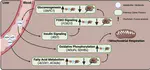
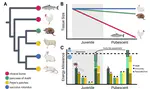
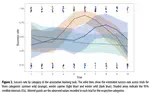
To meet the challenge of wintering in place, many high-latitude small mammals reduce energy demands through hibernation. In contrast, short-lived Eurasian common shrews, Sorex araneus, remain active and shrink, including energy-intensive organs in winter, regrowing in spring in an evolved strategy called Dehnel’s phenomenon. How this size change is linked to metabolic and regulatory changes to sustain their high metabolism is unknown. We analyzed metabolic, proteomic, and gene expression profiles spanning the entirety of Dehnel’s seasonal cycle in wild shrews. We show regulatory changes to oxidative phosphorylation and increased fatty acid metabolism during autumn-to-winter shrinkage, as previously found in hibernating species. But in shrews we also found upregulated winter expression of genes involved in gluconeogenesis: the biosynthesis of glucose from noncarbohydrate substrates. Coexpression models revealed changes in size and metabolic gene expression interconnect via FOXO signaling, whose overexpression reduces size and extends lifespan in many model organisms. We propose that while shifts in gluconeogenesis meet the challenge posed by high metabolic rate and active winter lifestyle, FOXO signaling is central to Dehnel’s phenomenon, with spring downregulation limiting lifespan in these shrews.
Gene expression reveals the pancreas of Aselli as a critical organ for plasma cell differentiation in the common shrew
Background Almost all mammals rely on the thymus and bone marrow to generate and differentiate B and T cells essential for adaptive immunity. A few members of the family Soricidae, or true shrews within Eulipotyphla, have also evolved an enlarged pancreas of Aselli, a kidney-sized organ hypothesized to serve this primary immune role, and whose gene expression profile is unknown. Results Here we introduce transcriptomes of juvenile Eurasian common shrews (Sorex araneus, family Soricidae) pancreas of Aselli. We compare these to those of the shrew spleen and chick bursa of Fabricius, an analogous, bird- specific organ, and explore differential expression overlaps with positively selected genes. Differential gene expression analyses revealed higher expression of genes that regulate the differentiation of B cells into long-term plasma cells (e.g., IRF4, XBP1, PRDM1) compared to the spleen and more convergent expression with the bursa of Fabricius than expected by chance (including IRF4). Overlaps with positive selection were as expected and included PTPRCAP, which regulates both T and B cell antigen responses and lymph node size. Conclusions Our results support the specialized role of the pancreas of Aselli in adaptive immunity, and we propose this uniquely enlarged organ evolved at the intersection between extreme metabolic demands and high parasite burdens in tiny yet very active shrews.
Programmed seasonal brain shrinkage in the common shrew via water loss without cell death
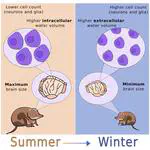
Brain plasticity, the brain’s inherent ability to adapt its structure and function, is crucial for responding to environmental challenges but is usually not linked to a significant change in size. A striking exception to this is Dehnel’s phenomenon, where seasonal reversible brain-size reduction occurs in some small mammals to decrease metabolic demands during resource-scarce winter months. Despite these volumetric changes being well documented, the specific microstructural alterations that facilitate this adaptation remain poorly understood. Our study employed diffusion microstructure imaging (DMI) to explore these changes in common shrews, revealing significant alterations in water diffusion properties such as increased mean diffusivity and decreased fractional anisotropy, leading to decreased water content inside brain cells during winter. These findings confirm that brain-size reduction correlates with a decrease in cell size, as our data indicate no reduction in cell numbers, showcasing a reorganization of brain tissue that supports survival without compromising brain function. These findings extend our understanding of neuronal resilience and may inform future research on regenerative mechanisms, particularly during the spring regrowth phase, offering potential strategies relevant to neurodegenerative disease.
Captivity alters behaviour but not seasonal brain size change in semi-naturally housed shrews
Captivity, frequently used in animal research, can profoundly alter brain size, cognitive abilities and activity levels. Critically, persistent exposure to stressors in captive environments can lead to chronic stress and subsequently to a range of health issues. However, the direct implications of captivity on research outcomes have not been thoroughly investigated. We examined the effects of captivity on the common shrew, Sorex araneus, a species that exhibits a profound seasonal reversible change in brain and body size. We compared wild shrews during summer and winter to assess seasonal changes in brain size and behaviour and then contrasted these findings with shrews kept in captivity for six months. Using repeated in vivo magnitic resonance imaging, we determined that the extent of seasonal brain size change was not affected by the semi-natural captive conditions. However, captivity led to increased activity levels and reduced learning motivation in the shrews, indicative of chronic stress. These results suggest that even semi-natural conditions can significantly alter the outcome of studies and these effects need to be quantified before experimentation.
Bat genomes illuminate adaptations to viral tolerance and disease resistance
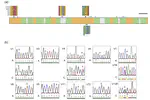
Zoonoses are infectious diseases transmitted from animals to humans. Compared to other mammalian orders, bats are suggested to harbor more zoonotic viruses(Olival et al. 2017). Infections in bats are largely asymptomatic(Schlottau et al. 2020; Guito et al. 2021), suggesting limited tissue-damaging inflammation and immunopathology. To investigate the genomic basis of disease resistance, the Bat1K project generated reference-quality genomes of ten bat species, including potential viral reservoirs. A systematic analysis covering 115 mammalian genomes revealed that signatures of selection in immune genes are more prevalent in bats compared with other mammalian orders. We found an excess of immune gene adaptations in the ancestral chiropteran branch and in many descending bat lineages, highlighting viral entry and detection factors, and regulators of antiviral and inflammatory responses. ISG15, an antiviral gene contributing to hyperinflammation during COVID-19(Perng and Lenschow 2018; Munnur et al. 2021), exhibits key residue changes in rhinolophid and hipposiderid bats. Cellular infection experiments show species-specific antiviral differences and an essential role offor protein conjugation in antiviral function of bat ISG15, separate from its role in secretion and inflammation in humans. Furthermore, in contrast to human ISG15, ISG15 of most rhinolophid and hipposiderid bats has strong anti-SARS-CoV-2 activity. Our work reveals molecular mechanisms contributing to viral tolerance and disease resistance in bats.
Frugivore traits predict plant-frugivore interactions using generalized joint attribute modeling
Under an adaptive hypothesis, the reciprocal influence between mutualistic plants and frugivores is expected to result in dispersal syndromes comprising both frugivore and plant traits that structure fruit consumption. How frugivore traits and within-species variation contribute to structuring dispersal syndromes is, however, often ignored. To address both gaps, we analyze traits for the mutualistic ecological network comprising Carollia bats that feed on and disperse Piper seeds. We used generalized joint attribute modeling (GJAM), a Bayesian modeling approach that simultaneously accounts for multiple sources of variance across trait types. In support of the adaptive hypothesis and indicating niche partitioning among Carollia bats, we find differential consumption of a suite of Piper species influenced by bat traits such as body size; however, Piper morphological traits had no effect on bat consumption. Slow evolutionary rates, dispersal by other vertebrates, and unexamined fruit traits, such as Piper chemical bouquets, may explain the lack of association between bat Piper consumption and fruit morphological traits. We have identified a potential asymmetric influence of frugivore traits on plant-frugivore interactions, providing a template for future trait analyses of plant-animal networks. As intraspecific trait variation is rarely included in studies on trait matching, this paper contributes to closing that important knowledge gap.
Gene expression comparisons between captive and wild shrew brains reveal captivity effects
Compared with their free-ranging counterparts, wild animals in captivity experience different conditions with lasting physiological and behavioural effects. Although shifts in gene expression are expected to occur upstream of these phenotypes, we found no previous gene expression comparisons of captive versus free-ranging mammals. We assessed gene expression profiles of three brain regions (cortex, olfactory bulb and hippocampus) of wild shrews (Sorex araneus) compared with shrews kept in captivity for two months and undertook sample dropout to examine robustness given limited sample sizes. Consistent with captivity effects, we found hundreds of differentially expressed genes in all three brain regions, 104 overlapping across all three, that enriched pathways associated with neurodegenerative disease, oxidative phosphorylation and genes encoding ribosomal proteins. In the shrew, transcriptomic changes detected under captivity resemble responses in several human pathologies, including major depressive disorder and neurodegeneration. While interpretations of individual genes are tempered by small sample sizes, we propose captivity influences brain gene expression and function and can confound analyses of natural processes in wild individuals under captive conditions.
Newly assembled pocket gopher genomes can facilitate conservation management of biodiversity
Texas exhibits one of the richest levels of pocket gopher diversity in the United States. Three genera (Cratogeomys, Geomys, and Thomomys) and 11 species are found in Texas. It is not surprising given the diversity of the Texas landscape (ecoregions, life zones, substrates, and vegetation) that these species are further subdivided into 29 subspecies in Texas alone. Pocket gopher distributions are determined by availability of suitable soil types and therefore often occur in small, isolated populations. For some taxa, limited distribution and ultimately small deme sizes result in populations that may require attention from a regulatory and management perspective. For many Texas pocket gopher subspecies, insufficient information exists to make sound recommendations relative to conservation status and needs despite decades of research collecting and evaluating data based on morphometrics, distributions and habitat preferences, karyotypes, allozymes, and mitochondrial DNA. As such, there is precedent for elevating pocket gopher subspecies to species after evaluation of available data, as well as subsuming subspecies into a broader taxonomic group. We used genomic techniques to identify genetically defined operational taxonomic units (OTUs) of pocket gophers to improve knowledge and understanding of pocket gopher distributions within the state. Using tens of thousands of single nucleotide polymorphisms, we determined the number of OTUs in each genus to be 5 for Thomomys bottae subspecies, 8 for Geomys species, and 5 for Cratogeomys castanops subspecies in Texas. In general, these data agree with current taxonomic hypotheses regarding Geomys and C. castanops; however, many T. bottae groups present similar genetic patterns that do not merit subspecies status based on these data, suggesting a more conservative classification of T. bottae in Texas and southeastern New Mexico that could facilitate conservation efforts, should they be necessary.