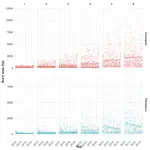
Changes in land use, climate, and socio-ecology drive altered fire regimes that in turn reshape global ecosystems. Rapid afforestation with commercial tree plantations is transforming fire-prone savannas and grasslands globally and particularly in tropical South America, yet its effects on fire dynamics remain poorly understood. Using hierarchical models, we analysed trends in annual burned area within concentric buffers (1 to 6 km) around each of 44 plantation and 52 grassland sites in Colombia’s Orinoquia region—a savanna grassland forest mosaic undergoing major land-use transitions from the expansion of commercial tree plantations. Plantations reduced burned areas in two ways: order-of-magnitude increases in plantation area reduced burnt area by 15% and plantation sites reduced their burnt area by 2% each year; both results consistent with trees replacing more inflammable grassland vegetation. While the mechanisms behind divergent savanna/plantation fire dynamics remain unresolved and could involve active fuel management and fire response, increased canopy cover or some combination thereof, this study provides spatially explicit, context-sensitive evidence on how land-use transitions interact with fire regimes with direct relevance for grasslands and savanna management and climate adaptation policy in South America.